Time period
Bartimeus – Mobility for Children and young people with visual Impairment
- Netherlands Zeist
Summary
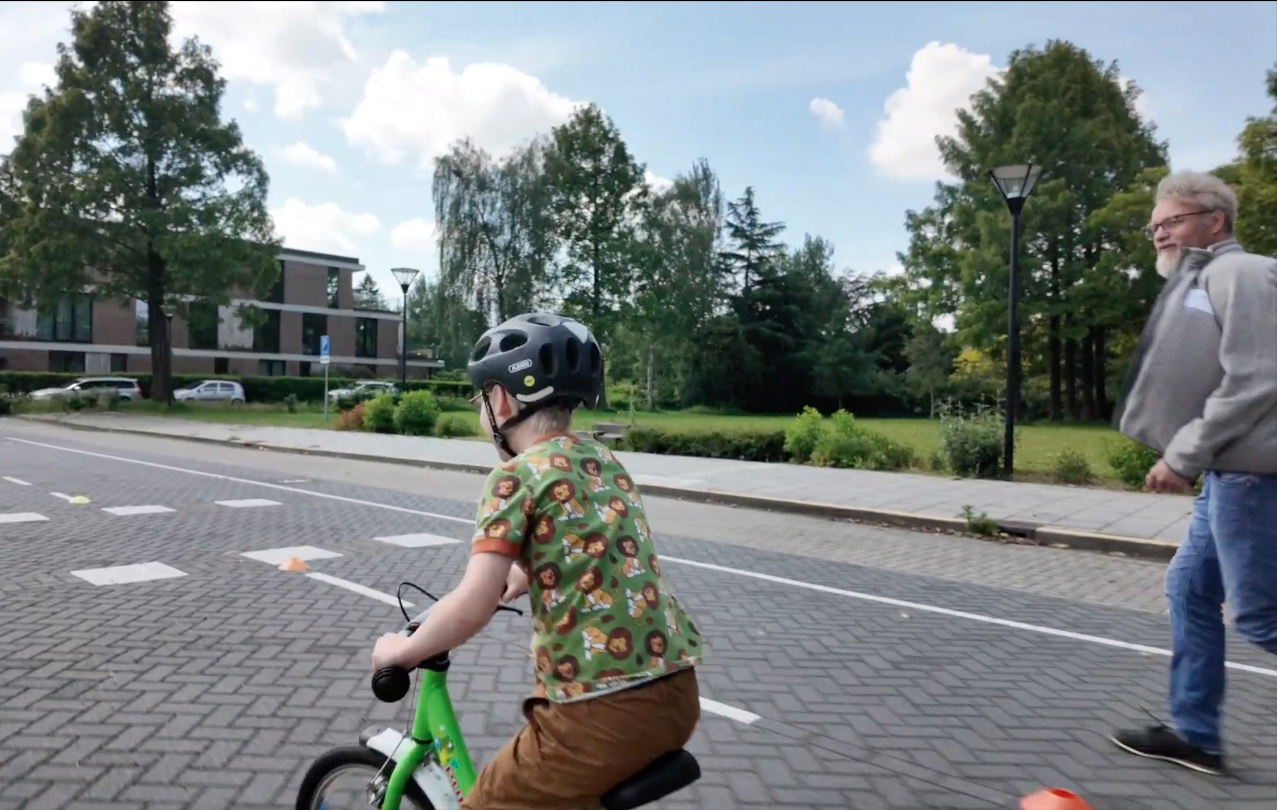
Bartiméus – Mobility for Children and Young People is part of a long‑standing national center of expertise in the Netherlands dedicated to improving the quality of life of people who are blind or partially sighted. Grounded in over a century of experience, the program promotes independent, safe, and sustainable mobility for children and young people with visual impairments. Beginning in early childhood, Bartiméus supports orientation and mobility skills at home, in school surroundings, and in public space, addressing challenges such as walking independently, crossing streets, cycling, and using public transport. The approach combines personalized one‑to‑one coaching, family involvement, assistive tools, and real‑life practice in everyday environments. Embedded in a strong culture of applied research and knowledge sharing, the program empowers children and young people to travel with confidence, autonomy, and dignity, demonstrating how inclusive mobility support can enable equal participation and lifelong independence.
Key aspects
-
Individualized independent mobility training
Bartiméus provides tailored, one to one mobility coaching that supports children and young people with visual impairments to walk, cycle and travel independently and safely in everyday environments. -
Early and lifelong mobility development
Mobility skills are developed from early childhood onwards, evolving from home orientation to navigating streets, school routes and public transport. -
Real life, place based learning
Training takes place in real contexts—home neighbourhoods, school surroundings and daily routes—ensuring skills are practical, transferable and sustainable. -
Child centred and family inclusive approach
Children’s pace, abilities and goals guide the process, while parents and caregivers are actively involved to build trust and continuity. -
Applied research and assistive tools
The program combines professional expertise, assistive technologies (e.g. white cane, apps), and applied research to continuously improve practice.