
Summary
“I Love Street” project, developed by MVRDV in Gwangju, South Korea, is part of the broader Gwangju Folly a city wide initiative using small scale architectural interventions to support urban regeneration.
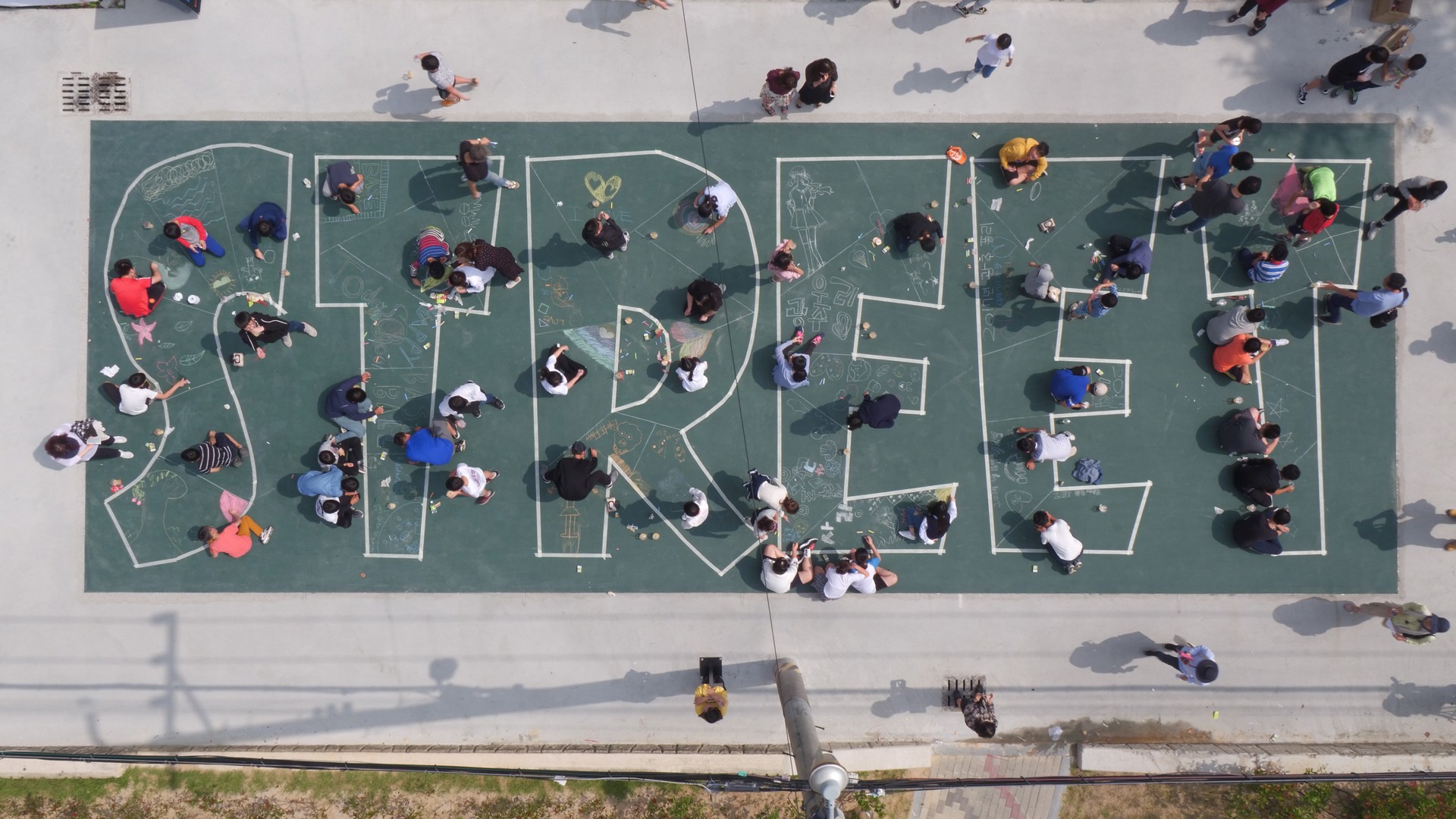
Within this framework, the project reclaims a narrow pedestrian corridor near Seoseok Elementary School, transforming an underused urban space into a “urban living room” for play, and social interaction. Co designed with students and local residents, the intervention features a 100 metre graphic ground installation, encouraging diverse uses of the space.
The design process was participatory, involving workshops where children influenced colors and patterns and contributed to construction. By embedding play and creativity into public infrastructure, the project fosters youth ownership and engagement, demonstrating how small, tactical interventions can activate everyday spaces and contribute to broader urban transformation.
Key aspects
-
Tactical intervention for regeneration
Small scale follies activate underused spaces and support urban renewal. -
Reclaiming street space
Transforms a traffic corridor into a multifunctional pedestrian space for play and social use. -
Child centred co design
Students actively shape the intervention, fostering ownership and local relevance. -
Platform for expression and experimentation
The “I LOVE” format creates a collective canvas, allowing users to continuously reinterpret and personalise the space.