
Time period
OLA Living Lab: Democratic Landscape Transformation for Youth in Vác
- Hungary Vác
Summary
The Vác Living Lab project, developed in Vác, Hungary, explores how participatory placemaking can reconnect children with nature amid rapid urban transformation. Responding to the decline of accessible green spaces and unstructured outdoor play, the project engages children, communities, interdisciplinary stakeholders, and landscape architecture students to better understand and enhance children’s everyday nature experiences.
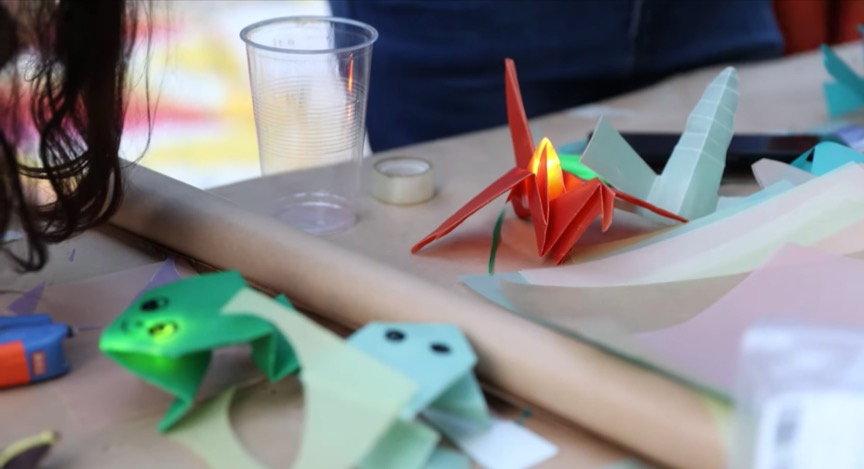
Focusing on the underused Törökhegy forest, the project applies a living lab approach through iterative phases of research, community engagement, and co‑creation. Combining interviews, drawing, mapping, public exhibitions, storytelling, and play‑based activities, it explores children’s relationships with urban nature while actively testing new forms of engagement. These methods generate insights while also acting as interventions that reshape perceptions and use of the forest.
A key outcome is the creation of a platform for dialogue between children, communities, and policymakers, supporting more inclusive and adaptive approaches to urban green space design.
Key aspects
-
Living lab as an adaptive Framework
Operates through iterative cycles of research, experimentation, and intervention, enabling continuous learning and refinement. -
Interdisciplinary and community driven
Engages children, communities, experts, and policymakers in shared knowledge production. -
Participatory and experiential methods
Tools such as child led walks, storytelling, and situational analysis support exploration and rethinking of children’s relationship with nature. -
Transferable placemaking approach
Develops a replicable, inclusive methodology for creating child friendly, nature based spaces.