
Summary
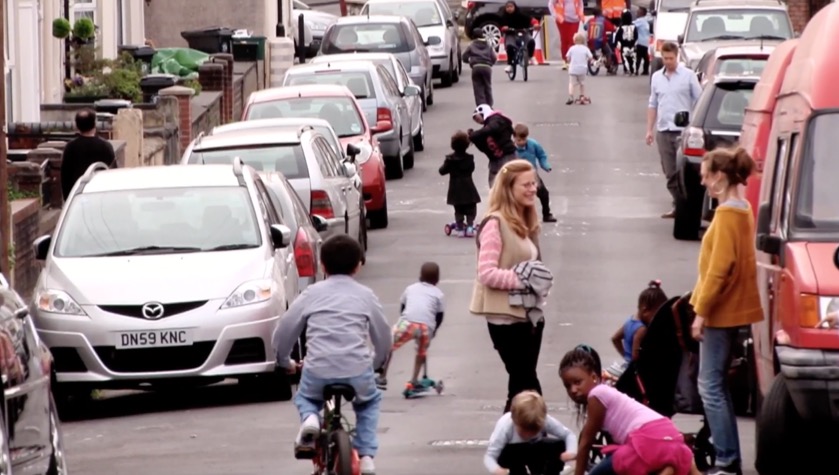
The Street Play Project by Play England evaluated temporary street closures across the UK that enabled children to safely play outdoors within their neighborhoods. In response to declining outdoor activity and increasing safety concerns related to traffic, these initiatives temporarily created spaces for unstructured play.
Evidence showed that during closures, children spent more than 70% of their time outdoors and engaged in significant levels of moderate to vigorous physical activity, often replacing sedentary and unhealthy behaviors. This contributed to improved wellbeing, confidence, and independent mobility.
Beyond individual benefits, the process strengthened community connections, increasing interaction between neighbors and fostering social cohesion. Particularly relevant in areas with limited green space and higher levels of deprivation, the model demonstrated how resident-led, low-cost interventions promoted healthier behaviors and reframed streets as shared social
Key aspects
-
Evidence based evaluation of street play interventions
Evaluates temporary street closures across the UK using quantitative and qualitative methods to assess their impact on children and communities. -
Improved health, wellbeing, and physical activity
Increases outdoor time and contributes to higher levels of physical activity, reduced sedentary behaviour, and enhanced wellbeing and confidence. -
Strengthened community connections and social cohesion
Leads to greater interaction between neighbours, fostering trust, social ties, and a stronger sense of shared community. -
Shift toward shared, people centred streets
Challenges car centric norms, supporting a cultural shift toward streets as social spaces for play, interaction, and everyday use.